
Treatments
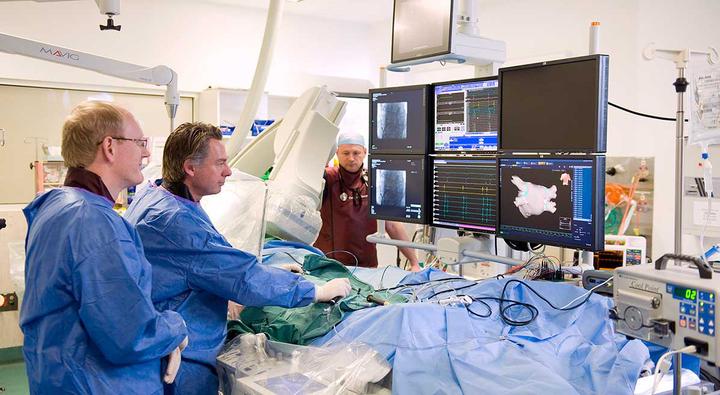
EP Study
A cardiac electrophysiology study is a minimally invasive procedure using catheters introduced through a vein or artery to record electrical activity from within the heart. It is a diagnostic procedure to diagnose site of origin and mechanism of tachycardia .
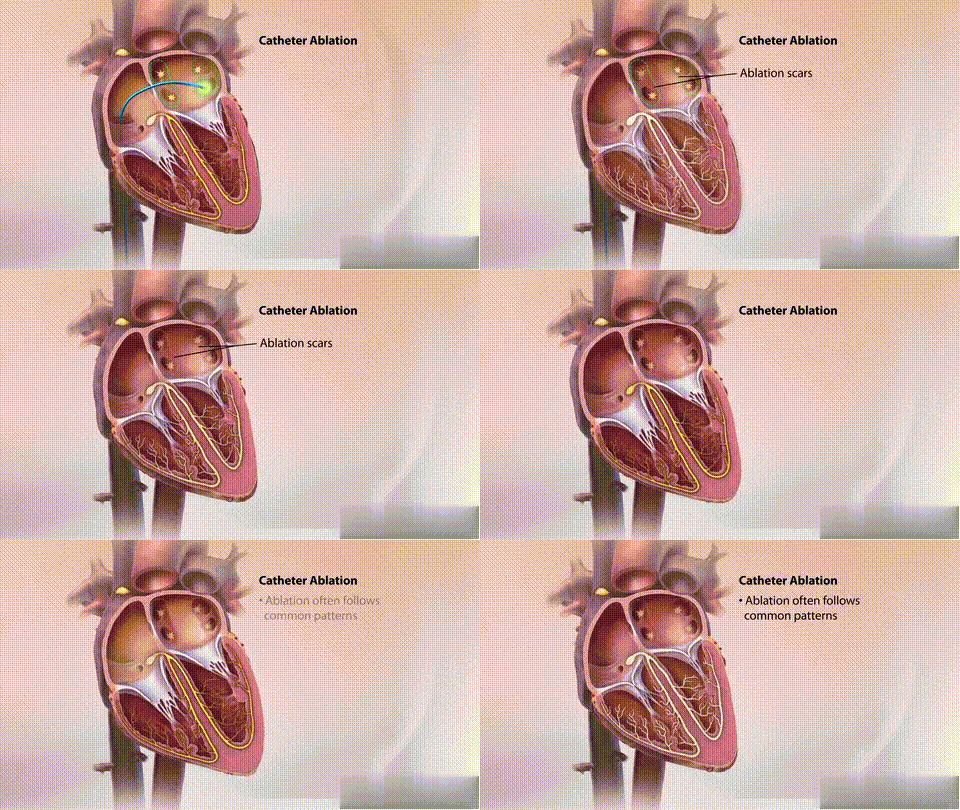
Radiofrequency Ablation
It is a therapeutic procedure done percutaneously to cure supraventricular tachycardia and ventricular arrhythmia using a catheter and delivering radiofrrequency current from the tip of the catheter to the myocardium.
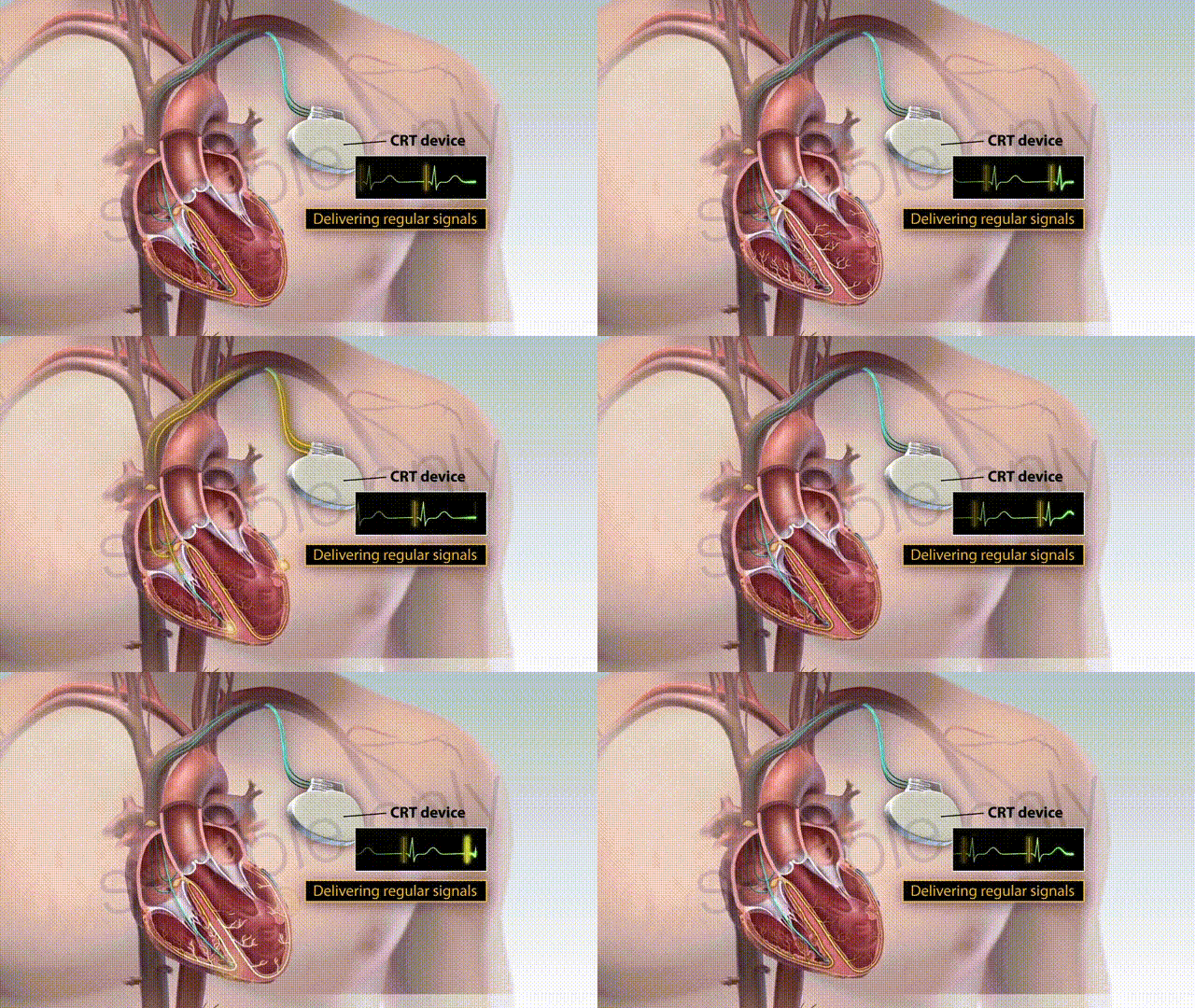
Pacemaker Implantation
A pacemaker insertion is the implantation of a small electronic device that is usually placed in the chest (just below the collarbone) to help regulate slow electrical problems with the heart. A pacemaker may be recommended to ensure that the heartbeat does not slow to a dangerously low rate.
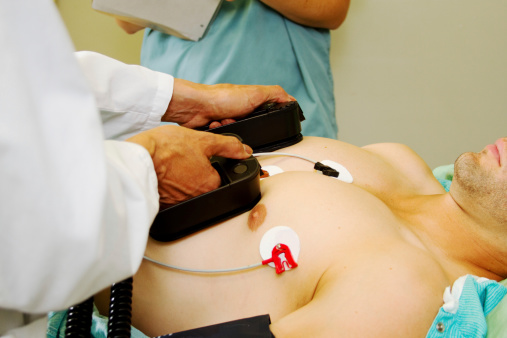
Interventional cardiology catheterization
ICT : It is a device to prevent a sudden cardiac death.
Cardiac resynchronization therapy
CRT : Its specialised pacemaker device used in patients with a weak heart (Ejection fraction less than or equal to 30%) to improve heart pumping capacity , quality of life and to improve survival.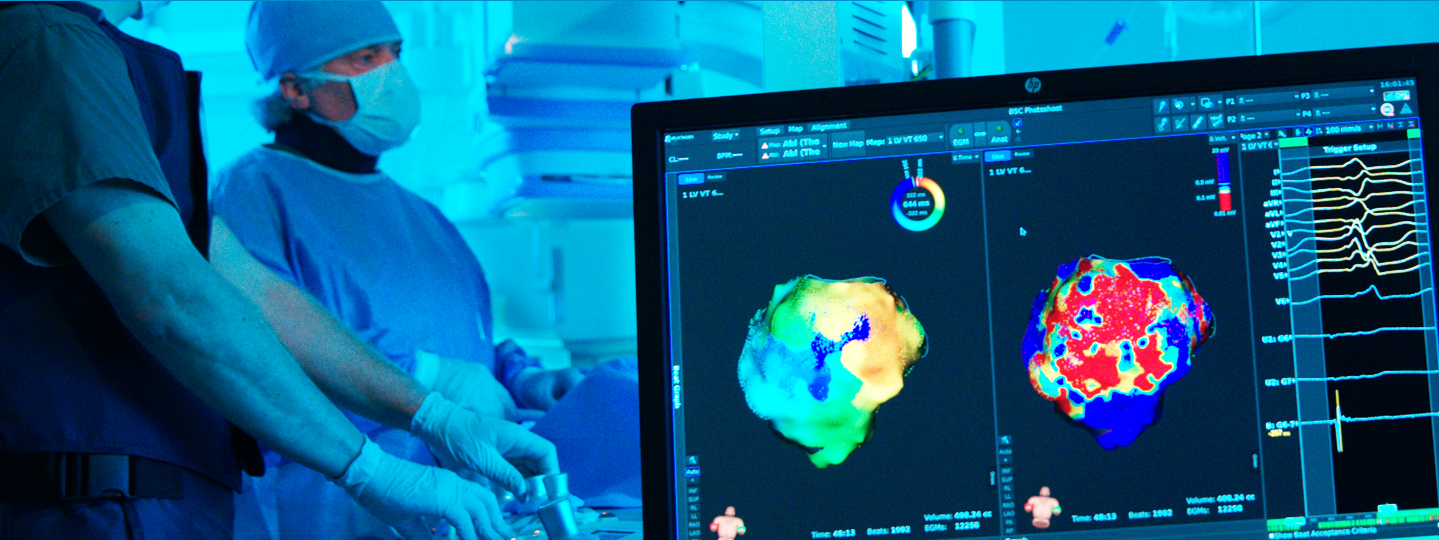
3D Mapping for Complex Arrhythmia
3D mapping creates a multidimensional image of the heart's anatomy. During cardiac mapping, your doctor stimulates the heart muscle to watch it beat and identify abnormalities related to a faulty heart rhythm (cardiac arrhythmia). The success of the procedure is improved to more than 80% by using this technology.
Balloon Mitral Valvotomy

Balloon valvotomy is used to increase the opening of a narrowed (stenotic) valve.Its a percutaneous procedure done within an hour and the patient can be discharged.